Software for inland shipping, built by a captain

Less admin. More sailing.

Most software for inland shipping tries to record work. ShipDocs tries to take it away — processes that skippers, planners and offices have been doing by hand for years, automated.

Born out of frustration. Every tool on this page solves a problem I ran into on board myself — because a captain should be sailing, not doing admin.

No PowerPoint ideas. No consultancy projects. Just software that's used every day.

What I build

Five tools, one principle: work that already exists shouldn't have to be done by hand again. Not loose side-projects — used every day, on board and across the fleet.

BargeFlow preview

BargeFlow

Stop retyping forms

Upload an existing form or PDF and turn it into a digital process — with checks, approvals and automatic document generation. Fill in → optionally sign off → optionally manager review → a finished document or certificate at the end.

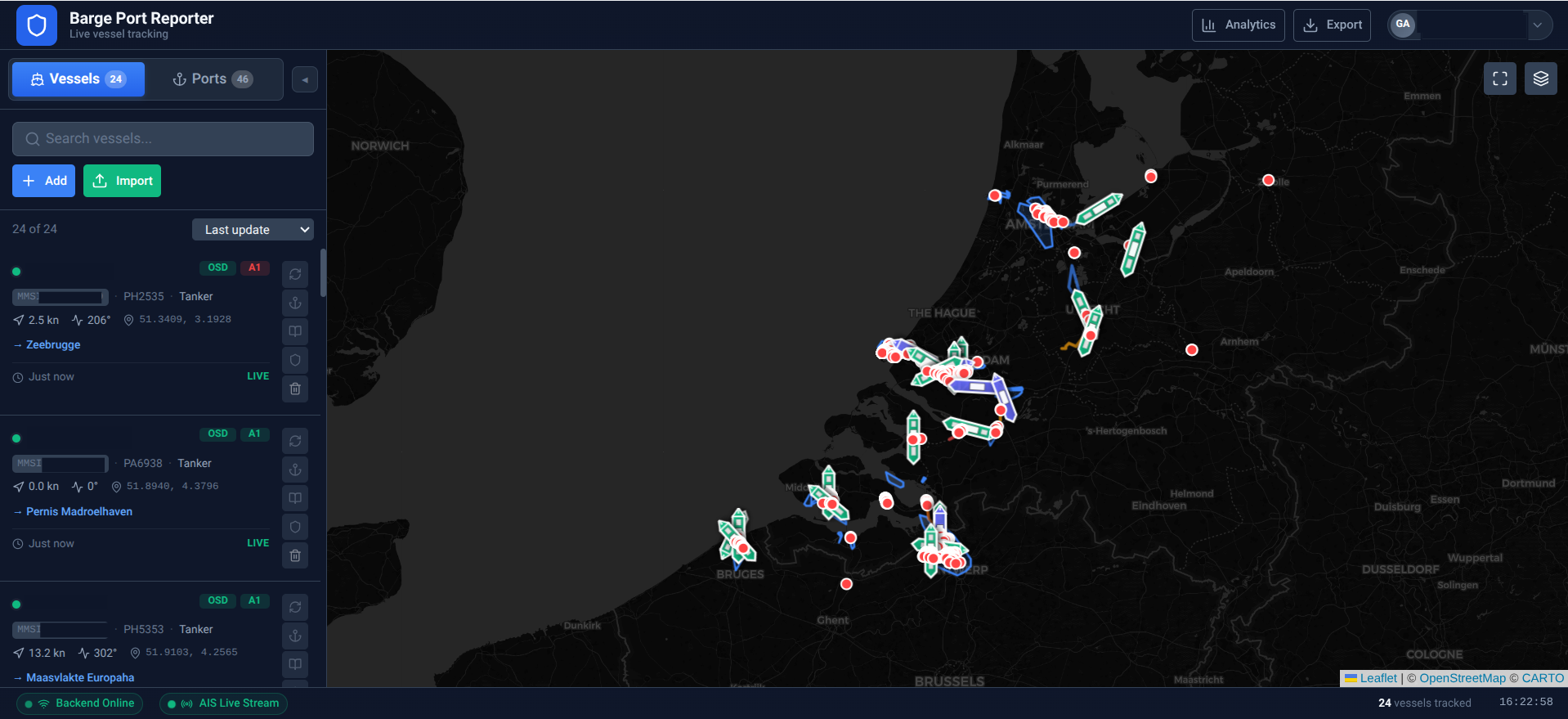
Barge Port Reporter preview

Barge Port Reporter

Fleet monitoring and sailing hours, verified

Verify port dues, terminal calls and berths on the basis of verified AIS data. Real-time tracking, automatic port-visit logging and a digital sailing log — it started as a tool to verify port dues and grew into a fleet-monitoring platform.

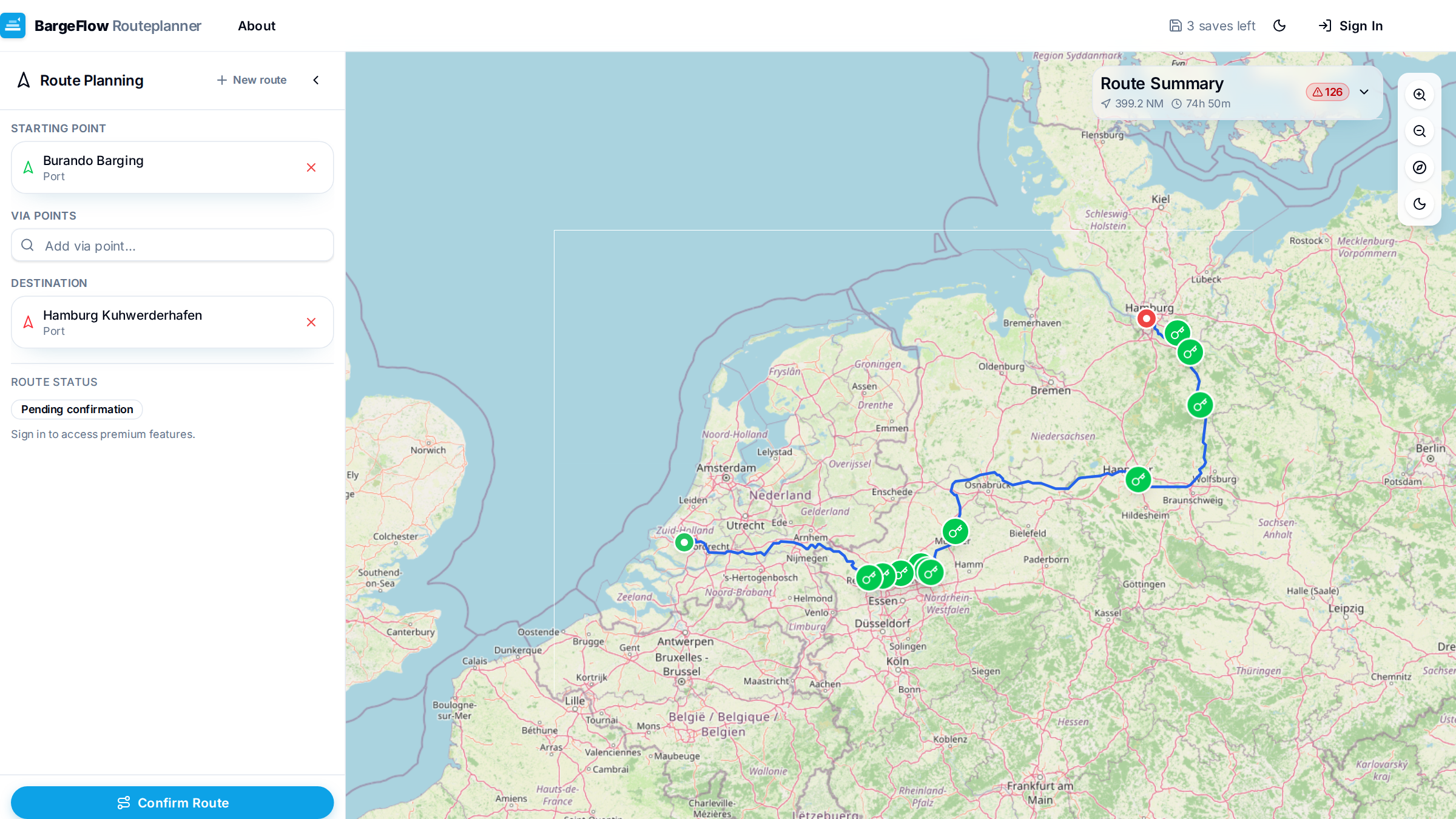
Reisplanner preview

Reisplanner

Maritime route planning that knows the infrastructure

Avoid surprises along the way and plan realistic sailing times based on the actual infrastructure. Route planning for inland shipping on an interactive map, with draggable waypoints and via-points — accounting for bridges, locks and operating hours, and for your vessel's dimensions and fuel consumption.

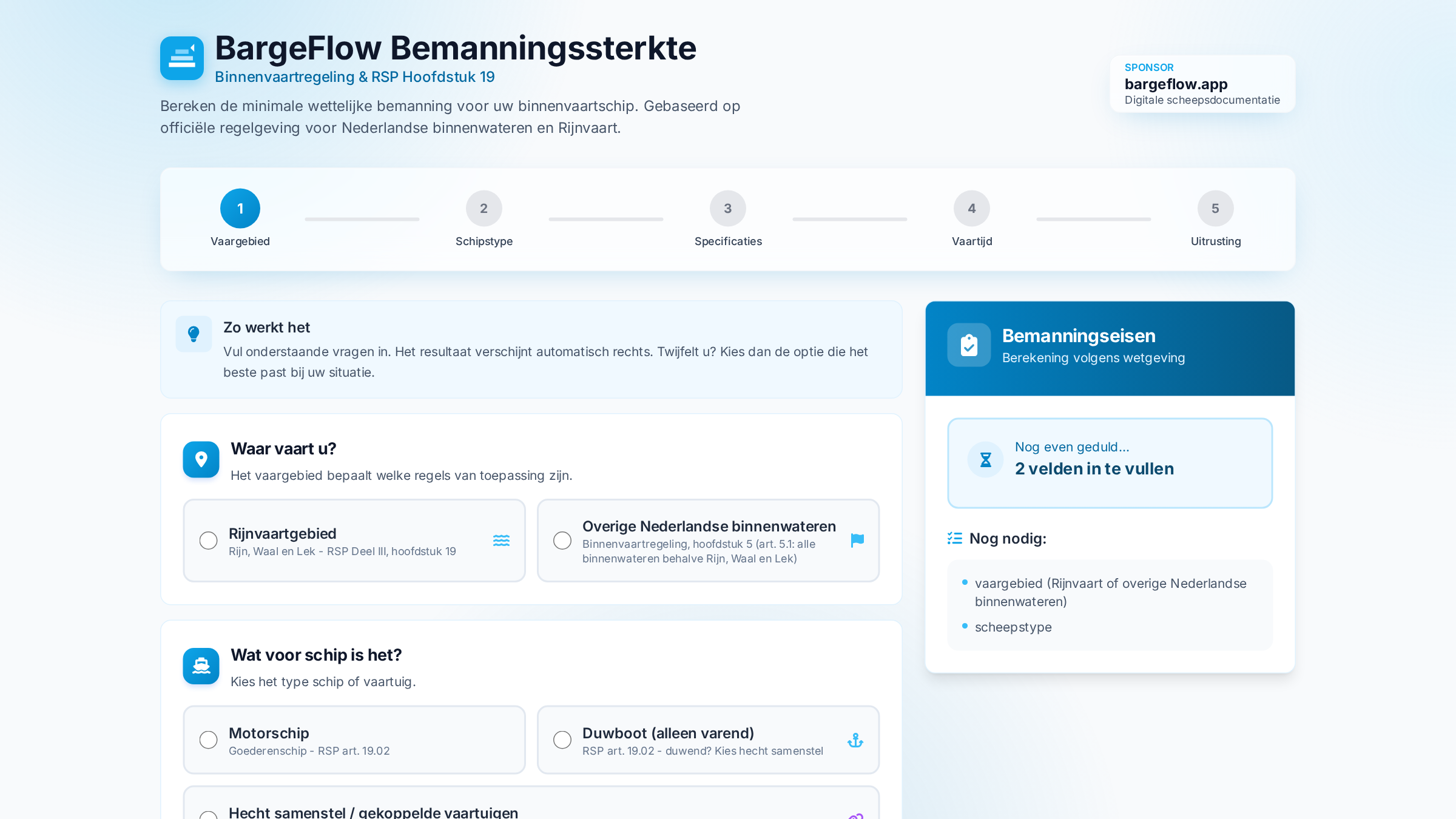
Bemanningssterkte preview

Bemanningssterkte

Statutory minimum crew, in a few clicks

A free calculator that works out the statutory minimum crew for an inland vessel. Not by gut feeling, but by the regulations: the Dutch Binnenvaartregeling Chapter 5 for Dutch inland waters and the RSP Part III Chapter 19 for the Rhine, Waal and Lek.

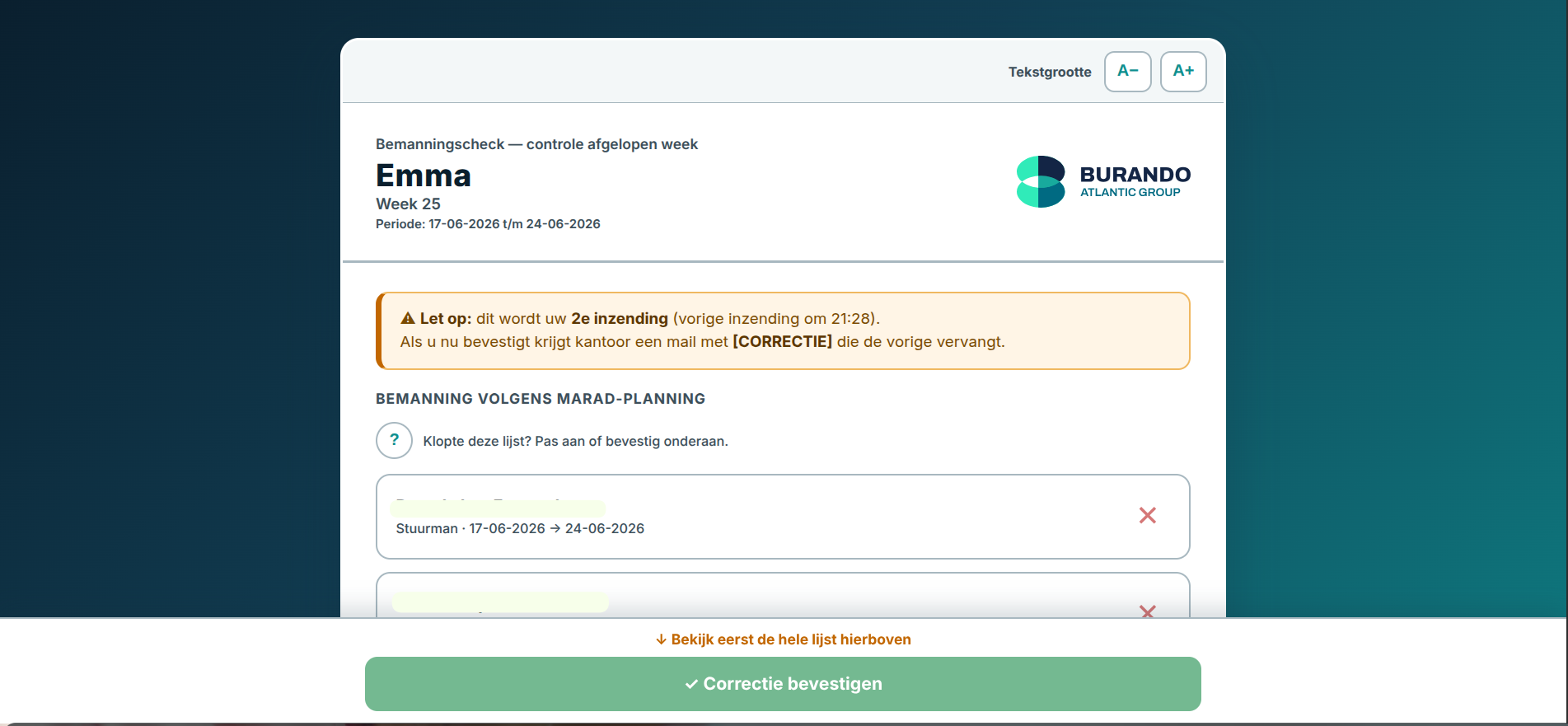
MARAD Weeklijsten preview

MARAD Weeklijsten

Weekly crew check, automated via MARAD

Every week the tool pulls the planning from MARAD and emails each skipper a personal verification link. The skipper confirms or corrects who was actually on board — and the office automatically receives a verified Excel weekly overview.

Why ShipDocs is different

Developed on board

Built by an active inland shipping captain, not by a vendor who only read about it.

Used in practice

The software runs every day on board and within fleet organisations.

No needless complexity

Only functionality that actually solves a problem.

Privacy by design

Crew and operational data are only processed where strictly necessary.

About me

I'm an inland shipping captain and a software developer. Not a coincidental combination: it's exactly why these tools work in practice and not just on paper.

My work happens largely on board, in a rhythm of two weeks on, two weeks off. I don't know the paperwork from a manual — I fill it in myself, on the bridge, while the ship keeps sailing. And that's where it began. Out of frustration. Macros in an Excel file that collapse at the wrong moment. A bunker receipt that has to be legally correct but is retyped by hand. Planning, crewing and sailing hours scattered across loose files no one can make sense of anymore.

I started solving it myself. First for my own ship, then for the whole fleet. By now that has grown into a series of applications — all from the same principle: built by someone who knows what it's like on board, not by someone who has only read about it.

That difference is in the details. The stop detection knows what a shift within a terminal is and doesn't glue it together as a separate port. The compliance engine knows the Dutch working-hours modes A1, A2 and NVT — not as a checkbox, but because I have to live by them myself. The crew check stores no personal data, because that is the only responsible way to handle crew data.

None of these tools is a prototype gathering dust in a drawer. They run — for me, on board, and across the fleet.
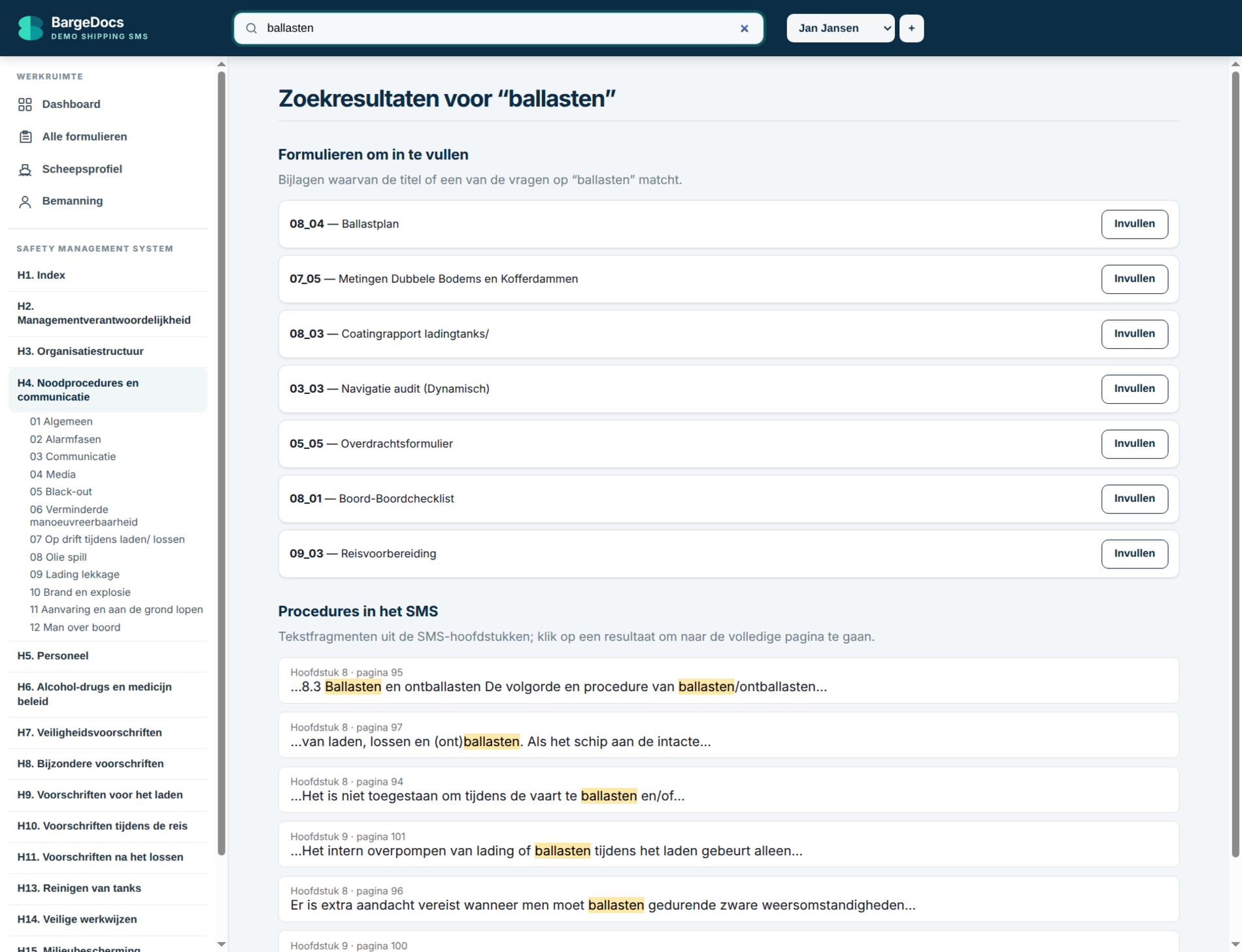
For the fleet

For skippers it means less hassle on the bridge. For the office, an overview that's correct — sailing hours, crew, documents — without anyone having to be policed. The skipper fills in what they already know; the office gets it back verified. Not surveillance software. Just work that happens once instead of four times.